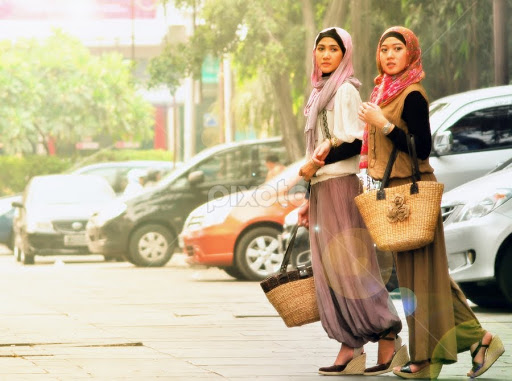
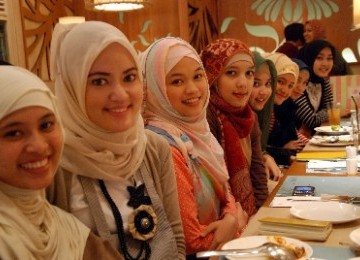
Showing posts with label malabis. Show all posts

Thursday, May 23, 2013

She was released the song on the Hijab

Hadith of the Prophet shohih show how noble a woman standing in the eyes of Islam, because it is not wrong if it is stated that she was the sister (brother or sister) of a man, his mother, wife, grandmother, aunt and sister Uwak.

    
"Women are the siblings of the man or twins"
    
(HR-Abu Dawud)
Woman is also a human being if not he certainly will not be any men, as well as those who desperately needed. The woman is the mother of the Prophets and Apostles, the mother of the scholars and righteous people, it is also a human being who was born princes and valiant fighters nan.In addition, she is a faithful servant of God that if anyone hurt, God declared war on him.

 
Islam came to bring the past and change the paradigm of ignorance, at that time women live in misery, at which time they hate birth of a daughter.Only in the shade lap and Shari'a law and Islam is a woman and women get various glory, appreciation, respect and extra protection, even fulltime and very perfect.One of the clear evidence of the high attention to women islam hijab is a command that serves to protect and cover the private parts or members of their body, from the view of men who are not entitled to see it.Movie stars 'Ketika Cinta Bertasbih' Oki Setiana Dewi has just launched his fourth book entitled 'Hijab in Love'. In addition, Oki also invites his sister to sing on the album with the same title.According to Oki, the album there will be nine songs with lyrics containing the arguments and the hadith. In addition, Oki also invites listeners to wear hijab with well.Oki recording his album for three months from October 2012. He was also involved in Bandung nasyid musicians."I'm in Love Hijab is cheerful and aims to inspire people to wear the hijab," said Shandy, Oki's sister when met at the Agency for the Assessment and Application of Technology, South Jakarta, Friday (17/05/2013) night.Oki and Shandy also planned around the six-city concert tour. What kind of concept?"The concept of different concert. Due here using a song with the traditions, the arguments, here we also discuss how her headscarf. Later we also use child dancers, and told that wearing the hijab must be true. DoNo hair was visible, "said the actress, writer and motivator 24-year-old Muslim woman.Through the album, Oki also want to create an Islamic works with more trendy. The reason is, that what you want delivered Oki accepted more easily by the children, adolescents, and young people."So not only the month of Ramadan alone. Submission with music, acceptable to teenagers," he concluded.

Wednesday, May 8, 2013

Why I Wear The Hijab and Then It Becomes Your Problem?

Why I Wear The Hijab and Then It Becomes Your Problem?
By Aisha Aijaz

I am a woman, and I am not a sexual commodity, I'm a human being like you, too. But I'm also a hijab wearer, and know hijab is my identity, it's related to my beliefs.

I do not wear hijab at a young age, I did not wear a veil on the orders of a father who suppress. I am compelled to wear the hijab when I was exploring the message of God that I have read since childhood, through the understanding and study with the help of scholars, so I understand what is meant with veil. I am confident and happy wearing it. Since I know the importance of wearing the hijab clearly connected to my faith in God.

"I believe in God and His word, I love the Prophet Muhammad, and for my character Aisha and Fatimah is a Muslim models for me.

Hijab is part of my personality, like a kippah for Jews and Christians. Hijab is the message of peace which I wear with pride. Let the world know that I am doing my best to maintain the sanctity and follow the command of my Lord. It is a reflection that I am not a slave of capitalist industrial companies bent on exploitation of naked women to sell everything from cigarettes to luxury cars.

Hijab gives me freedom, liberty judged not on the color of skin and body shape details. I am free from the shackles of a few people who used to give an evaluation in accordance with ladies long or short skirt, neck of beauty, intelligence, and character-character that other people do not need to be assessed.

Hijab is part of my personality, then why do Christians and Jews fear 'Hijab'?

With just a piece of cloth on my head, I feel empowered as a woman. But part of my community seems to have a problem with it. Some people who have called the hijab as a liberal pedestal napkin "dining table". And I was wondering why the world is afraid of just the "Hijab", I wonder?

What ukhti Marwa Al Sherbini killer fear 'Hijab'? Marwah was then aged 32 years, he was a pharmacist, and was three months pregnant, she was a loving wife and a mother of two-year-old son, whether he be a threat to the world? Oh, why did you call her a whore, and feasible terrorist stabbed 18 times to death in public in German courts?

Is 'hijab' the biggest threat to European society, such as France and other countries are banned? Think!

Try you see, some very successful women in the West are turning to Islam and chose to cover themselves with the veil, they all have the humility and have found peace.

I quote Yvonne Ridley, a journalist woman who converted to Islam years ago:

'My clothes will tell you that I am a Muslim and I hope will be treated with respect, like respected Wall Street banker would say that the suit defines him as an upper-class executive. "

Think rationally and decide! Why I wear hijab, then it becomes a problem for you?

Hijab Trends In Indonesia

Hijab Trends In Indonesia

Hijab user in Indonesia today more and more in various circles, both from the celebrity, students, housewives, office workers, businessmen to government officials. Increasing the hijab users is influenced by a variety of reasons that become cracked inspiration for the hijab users.

The first thing is awareness on the order are required to wear the hijab for Muslim women better than women themselves or the willingness of the advice they get from family or those around him.

Both are Muslim fashion trends are often performed in the television media such as movies un-Islamic, soap operas, recitals, singers who wear the hijab and television host.

The third is a social networking site that leads its users to upload a profile photo to wear hijab, or the moment when they wear the hijab, and also many hijabers community in the online world.

In addition to the hijab users in Indonesia are more and more, particularly young hijabers, to a certain extent influenced by the non-conventional hijab trends that go viral over the internet and media media. In the visible we see Hijabers Community as a community development is a trend setter, a lighter mass enthusiasm for veiling and looks fashionable.

The changing face of veiled Muslim women are becoming more dynamic this time, also be influenced by the personal style of some hijabers which eventually became muse, a source of inspiration for many Muslim women in Muslim dress. Anyone hijabers the muse? Well this is not new, you already know them all.


1 Dian Pelangi

Who inspired your hijab? This sort of question has been posed to thousands hijabers through various media, and most of the answers, Dian Pelangi. Young, fashion designer, social media and brand owners conscious fashion's most influential Muslims. The owner of the Twitter account @ Dianpelangi with over 134,000 followers (and counting) is to make a breakthrough and became a phenomenon with tie dye design / jumputan very wearable for young Muslim women. Various achievements continue to be achieved by Dian, a fashion designer and Muslim 'ambassador'. Dian is the only elected Muslim designers in the Fashion Pioneering Program and will participate in Paris Fashion Week 2014.


2. Fifi & Hanna Alvianto Faridl

It does not seem to separate this hijabis duo, who have the passion and 'anxiety' same about Muslim fashion, especially in Indonesia. Start of the blog hijabscarf, Fifi and Hanna start voicing that Muslim dress meaningful commitment to free and at the same time. Personal expression as anything we should be able to make happen in the Muslim fashion, and never be afraid to try something new. Fifi and Hanna read blogs much influence hijabers to further explore their personal style, and truly understand the meaning of Moslem 'liberating'. Their work continues with the publication of Laiqa Magazine, a magazine that puts the modest hijab fashion, with a strong touch of graphic design.


3. Ria Miranda

Indonesian Muslim fashion trends are awash with pastel lines and a touch of the feminine and girly, which celebrate the beauty of a woman, heavily inspired from a Ria Miranda, designers and brand owners riamiranda. Ria believes that a Muslim woman is a gentle person, polite and calm, which is reflected in every design. Strong character Ria clothing design makes this irresistible to many hijabers, and long lasting. His latest work is Minang Heritage, raised songket typical of West Sumatra which is modified into soft colors and pastels. Songket motifs are also applied to the chiffon fabric, a lightweight fashion and high-power use. Something that we have never made before.


4. Siti Juwayriah

One of the most famous bloggers in Indonesia hijab! I'm sure all (members FD) here agreed with that label. Siti hijabers figure seems to represent Indonesia, an ordinary woman who is not a model, but it looks very comfortable and fashionable with spastic style. Believe it or not, this girl has that 'magical' power, so that a figure with that most Muslim fashion brand muse. She knows how to nail an outfit, and everything seems to look good on her. Not to mention the brand shawl creations. 'Fanatic' who also became the 'it' shawl for hijaber. Kaffah become a new addiction, which always hunted and gone in an instant, despite being produced in large numbers.


What about your own, whether there hijabers figure in Indonesia that affect your style and do you think we miss out on the list? Please do share.

Wednesday, April 24, 2013

Hijab Charm Of Indonesian X-Factor Participants

 Hijab Charm Of Indonesian X-Factor Participants

Allah says in Surah Al-Ahzab: 59:

"O Prophet, tell your wives, your daughters, and the wives of the believers: 'Let them extend their scarf around the body. 'Thus it is that they are easier to be known, because they are not disturbed. And Allah is Oft-Forgiving, Most Merciful. "And also in Surah An Nuur 31 ..." And let them cover with cloth to his chest crippled ... "

God's command is clear and has not changed since the Qur'an in accordance with the times, even though a lot of times because of technological change is so rapid, but not necessarily then follow the Qur'an times, but A time who follow the Qur'an.


When we wear the hijab still feel hot there may be something wrong with our hijab style. May be too tight, or there are the ties that really should not need to install so that even to grip.

There's nothing wrong with Islamic law, even if we have yet to find happiness and peace as Muslims, perhaps we have not been up to her. And we ought to study Islam's even harder. Because we know it syammil-mutakamil Islam, Islam was perfect and complete. The whole rule of life that exist in Islam. Therefore we should be happy and proud as Muslims. One form of pride we are not ashamed to show our identity as a Muslim. Not shy or believe in half measures in order and wear the hijab in accordance Shari'ah.


Fatin Shidqiyya is one of the participants of the talent in the world of singing that is Indonesian X-Factor. Fatin has a very distinctive sound that is easily recognizable voice. Not only is her voice, which makes her different from other female participant was she always used Hijab.


Many circles are pro-veil worn by one of the participants x-faxtor this. Majelis Ulama 'for example, Once upon a time Majelis Ulama' letter to Fatin the veil she wore. Majelis Ulama 'hope, through Fatin, the world can get to know the real meaning of the hijab and jilbab is possible to make a pretty woman.

Many people in Indonesia are always waiting for the distinctive sound of Fatin, but there are also possibilities that await the appearance of Fatin hijab fashion. Yes, from the beginning of Fatin had been committed for not removing her hijab. One juror also told him not to remove her hijab because it is a typical icon of Fatin own.


She only heard of it briefly and interpret it as a support for her. "Not to read but had heard. Glad, very glad, that there is support, plus much. So, I'm grateful and prayers to all. So keep support it," Fatin said when met after the Gala Show Indonesian X-Factor at RCTI.

In her letter suggests Fatin Cholil to hold to the principle, which is not open nakedness, not transparent, and not tight.

Responding to the claim Fatin will not open her scarf as feared. For 16-year-old virgin's veil was her identity. For her, it's impossible just take off the hijab for reasons of title or the lure of a career on the rise.


A similar suggestion was sung Bimbim, drummer of band Slank. When a guest star on the show, Bimbim advised that Fatin not sway and retains its appearance with hijab.

 Fatin Shidqia different appearance from the other it also invited the attention of two French journalists who were covering the activities Anggun C. Sasmi in Indonesia last week, including covering the X Factor.

"There are two French journalists, they see you sing and you are very unique. Outside of your voice, They're surprised at you, wear the hijab but looks modern "Anggun said in the comment section when the jury in a television studio. Anggun told journalists that the veil is perfectly legal here and in many places.

By Anggun, in addition to a unique way of singing, how to dress Fatin has its own charm. Although wearing hijab, during this Fatin still look fashionable and trendy, fashionable and wear age-appropriate clothes.

"It's so you and your strength remains like this (wearing hijab)," Anggun message to Fatin. Fatin is known as the hijab since early appearance.

Sunday, April 14, 2013

Does The Girl Who Wears Hijab Have To Cover Her Feet?

Does The Girl Who Wears Hijab Have To Cover Her Feet?

 Praise be to Allaah.

At the time of the Prophet (blessings and peace of Allah be upon him) women were keen to cover themselves completely, which includes covering the feet. They used to let the hem of their garments hang low. One of them asked the Messenger of Allah (blessings and peace of Allah be upon him) about letting this hem touch what is on the ground, which may make it dirty, and he said: “That which comes after it purifies it.” On another occasion, when he (blessings and peace of Allah be upon him) said that women should let their hems down by one hand span, one of them said, “But then her feet will show.” This indicates that they were keen to cover their feet and that the feet are part of that which must be covered.

A woman asked Umm Salamah, the wife of the Prophet (blessings and peace of Allah be upon him): I am a woman whose garment drags, and I may walk through a dirty place. Umm Salamah said: The Messenger of Allah (blessings and peace of Allah be upon him) said: “That which comes after it purifies it.” Narrated by al-Tirmidhi (143), Abu Dawood (383) and Ibn Maajah (531). The hadeeth was classed as saheeh by Shaykh al-Albaani in Saheeh Abi Dawood, 407.

It was narrated that Ibn ‘Umar (may Allah be pleased with him) said: The Messenger of Allah (blessings and peace of Allah be upon him) said: “Whoever lets his garment drag out of pride, Allah will not look at him on the Day of Resurrection.” Umm Salamah said: What should women do with their hems? He said: “They should let them down a hand span.” She said: Then their feet will show. He said: “Then let it down a cubit, but no more than that.” Narrated by al-Tirmidhi (1731); he said: This is a saheeh hasan hadeeth. Also narrated by al-Nasaa’i (5336). The hadeeth was classed as saheeh by al-Albaani in al-Silsilah al-Saheehah, 1864.

So it is not permissible for the woman to wear open shoes which show her feet. But if her clothes are long and she wears socks, there is nothing wrong with that, although it is better for her to cover the feet with the garment and not with socks.

Shaykh al-Islam Ibn Taymiyah (may Allah have mercy on him) said:

If a woman wears pants or loose khuff (leather slippers), and the jilbab hangs over it so that the shape of the foot cannot be seen, this achieves the purpose, unlike the tight khuff (leather slippers) which shows the shape of the foot, because this is worn by men.

Majmoo‘ al-Fataawa, 22/148

Shaykh Ibn ‘Uthaymeen (may Allah have mercy on him) said:

It is permissible for a woman to let her garment down below the ankles. In fact this is what is prescribed for women, so that they may cover their feet. Covering the feet is something that is prescribed for women and is in fact obligatory for them according to many scholars. What a woman should do is cover her feet, either with her garment which is long and covers them or by wearing socks or shoes and the like.

Fataawa al-Mar’ah al-Muslimah, 1/437

And Allah knows best.

Islam Q&A

Does She Have To Wear Hijab All The Time?

She lives with her husband’s family; does she have to wear hijab all the time?


The Question:

I want to ask about the woman who covers her face, if she marries a man who lives with his family and he has grown-up brothers, and he does not have enough money to buy a house or even a room, and she finds that she has no choice but to help his mother in the kitchen, for example, and her husband’s brothers come and go from the kitchen as they need to.
Can she take off the khimaar and gloves from her face and hands in front of her husband’s brothers and keep them on in front of other people who are non-mahrams, even though the Messenger (peace and blessings of Allaah be upon him) said of the in-law “The in-law is death” and warned against them more than other non-mahrams? Does that also apply to other relatives who are non-mahrams (such as the paternal uncle or sister’s husband)?.


Answering:

Praise be to Allaah.

What a woman is obliged to do is to cover her hands and face in front of all non-mahram men, and avoid being alone with them, especially her relatives who are not mahrams, since because of their closeness fitnah (temptation) is likely to occur more rapidly than with others. It is more essential for her to cover in situations such as that which you asked about, where you live with your husband’s brothers in the same house. That is because mixing a great deal with non-mahrams weakens one’s modesty and makes one more likely to sin. If that is accompanied with uncovering the face and taking the matter of covering lightly, then it is more likely to lead to fitnah and sin. How many such incidents have occurred and families have been destroyed and family ties severed, because of carelessness in such situations.

The scholars of the Standing Committee were asked:

I am a man who is working and married, but due to my father’s health and financial situation we live in one house. Please note that I have two brothers, the youngest of whom is about 17 years old. What is your opinion on my wife and me staying with my father and brothers in one house?

They replied:

There is nothing wrong with your brothers living with you in one house, so long as your wife is modest in her dress and wears hijab, and is not alone with either of your brothers in the house. End quote.

Fataawa al-Lajnah al-Daa’imah (19/366, 367).

On our site there are a number of similar questions which you can refer to. See questions no. 6408, 13261, 40618, 47764 and 52814.

And Allaah knows best.
Islam Q&A


Saturday, March 23, 2013

Muslim Women And hijab matching with Islamic Sharia

Muslim Women And hijab matching with Islamic Sharia
Nurtured By: Ustadz Fitrani Haryadi, SE

Question:

Assalamu'alaikum wr. wb.
    Ustadz, please explain in more detail how the hijab, or Islamic headscarf-correct in Islam? Jazakallah.

[The question of matching readers letter by Nur Diversity and several other students (SMA N Plus Sukowono), students SDIT Al Hikmah, and Muhammad Haris (TKJ. SMK Negeri 2 Jember)]

Answer:

Wa'alaikum salam wr. wb.
Praise belongs to Allah, sholawat and greetings may be given to our Prophet Muhammad SAW uswah, family, friends and the Muslims. Amma ba'du.
God blessed Muslim Friend, Maybe we've heard qosidah song entitled "White Veil" which is very popular today. In the song is a white veil is a cloth veil worn by Muslim women in general are white. In most societies we also understand that the so-called veil is a cloth veil, perhaps including you, calling you usually wear veils as the hijab. Already Align mention of the term for a cloth veil veil worn by Muslim women? let's review based on the guidelines of our lives that is Al-Quran and Al-Hadith.

For a Muslim when he was walking in the street umun (outside the home) there are certain clothes that have been set by the shari'ah. A Muslim is not enough to cover wear-as long pants and long-sleeved clothing for example-even though the clothing is to cover nakedness. He is not worth going out if it is still using the clothes. Therefore, for the conditions in hayatul 'am (general life), there are certain clothes that must be worn by a woman syar'i. A discussion of different cover nakedness discussion women's clothing in public life (outside the home). Used women's clothing when out of the house consists of upper clothing (khimar / veil) and the bottom of the dress (hijab). Hijab terms can be found in the Qur'an Surah Al Ahzab (33) verse 59:
"O Prophet, say to your wives, daughters and wives of the believers:" Let them extend their scarf to the whole body. " such that they are so much easier to be recognized, therefore they are not alone. and Allah is Oft-Forgiving, Most Merciful. "

The meaning of the veil in the verse is meaningful milhafah or any cloth that can cover the entire body. in the dictionary Al-Muhith declared thus:
Hijab is like sirdab (tunnel) or sinmar (hallway) that loose clothing for women than baju kurung or any cloth that can cover their daily attire.

While the dictionary-Shahhah Ash, Al-Jawhari states:
Hijab is long and loose cloth (milhafah) are often called mula'ah.

Understanding is consistent with a history that has been said of Ibn 'Abas stating that the veil is fabric that serves to cover the outside (clothing everyday women) from top to bottom. From some of the above understanding we can see that the veil is a loose women's clothing that covers the body from neck to toe with both channel models or pieces that cover the underwear.

While the term "khimar" or upper garment, it is as stated in the Qur'an Surat an-Nur verse 31:
"Say to the believing women:" Let them hold his views, and his cock, and they do not Appears jewelry, except for a (regular) appear thereof., And let them put her veil fabric kedadanya, "
That let the women spread a cloth covering his head on the neck and chest that folds in clothing and outerwear in the neck and chest tersemunyi.

In order not to be seen when the wind curves or because the sun then should a woman wear mihnah, which is part of the women's clothing that is usually used in the home (such as culottes, pajamas, leggings, etc.). These clothes should only be worn in the house that only mahram only and if the clothes out of the house then this should be covered with a headscarf. Thus, the ideal Islamic headscarf to wear out of the house consists of mihnah (inner garment), Jilbab (outer garment bottom), and the khimar (outer upper garment / veil).

Maybe for some people clothes is less popular and they consider too "complicated" that limit the movement of women with high mobility, they want to model clothes that are practical, fashionable and modern which makes them appear confident, na'udzubillah. How can a Muslim woman be more confident with wearing clothes that do not nyar'i?. The reality is that today's demikan rise of Muslim dress models are merely following the trend of the market without regard to the provisions of Personality '. Rest assured Muslim pal, just by wearing clothes according to the shari'ah is you will get the glory in his side. May the guidance of Allah is always near to us, Amen.
Wallau a'lam bish-showab

Again Hijab Appropriate criteria Shariah

Again Hijab Appropriate criteria Shariah

Previously I posted about the appropriate criteria hijab sharia here. There's just the points mentioned criteria mentioned briefly without argument. As for this post, God willing, I will mention the arguments of the criteria mentioned.

Criteria appropriate hijab Shari'a:

1. Covers the entire body except the excluded.

This criterion is in his words:

{يا أيها النبي قل لأزواجك وبناتك ونساء المؤمنين يدنين عليهن من جلابيبهن ذلك أدنى أن يعرفن فلا يؤذين وكان الله غفورا رحيما}

"O Prophet say to your wives, daughters and children of believers: 'Let them extend their scarf around the body. That is that they are easier to be recognized, and they will not be disturbed. And Allah is Oft-Forgiving, Most Merciful "(Surat al-Ahzab 59)

Also he said:

وقل للمؤمنات يغضضن من أبصارهن ويحفظن فروجهن ولا يبدين زينتهن إلا ما ظهر منها وليضربن بخمرهن على جيوبهن

"Say to the believing women:" Let them hold their views and maintain their pubic and let them show off their adornment except what appears from their usual. And let them cover with fabric hoods to their chest ... (Surah An Nur: 31)

What do you mean ما ظهر منها (commonly seen)? Ibn Abbas said:

ما في الكف والوجه

"Palms of the hands and face. "(As-Sunan Al-Bayhaqi Lil Kubro no. 2993)

2. Thick and not transparent

The Prophet صلى الله عليه وسلم said:

صنفان من أهل النار لم أرهما قوم معهم سياط كأذناب البقر يضربون بها الناس ونساء كاسيات عاريات مميلات مائلات رءوسهن كأسنمة البخت المائلة لا يدخلن الجنة ولا يجدن ريحها وإن ريحها ليوجد من مسيرة كذا وكذا

"Two groups of people who have never seen hell, namely: A clan that has a whip, like the cows they use it to hit the man and the woman who dressed but naked, waddle, their heads like the humps of camels slanted, women like it will not enter Paradise and will not smell it, even though it smells wafted over this trip and it was. "(Narrated by Muslim)

Ibn Abd al-Barr said:

أراد صلى الله عليه وسلم النساء اللواتي يلبسن من الثياب الشيء الخفيف الذي يصف لا يستر فهن كاسيات بالاسم عاريات في الحقيقة. نقله السيوطي في تنوير الحوالك (3/103).

"You mean he صلى الله عليه وسلم that women who wear light clothing, which can describe the shape of her body and can not hide it. They were still dressed in his name, but in fact they were naked. "(Imam As-Suyuti quotes it in Tanwir Hawalik 3/103)

3. Wide and not narrow.

Usamah bin Zaid رضي الله عنهما said:

كساني رسول الله صلى الله عليه وسلم قبطية كثيفة مما أهداها له دحية الكلبي فكسوتها امرأتي فقال: ما لك لم تلبس القبطية? قلت: كسوتها امرأتي, فقال: مرها فلتجعل تحتها غلالة, فإني أخاف أن تصف حجم عظامها "

Prophet صلى الله عليه وسلم never gave Qibthiyyah thick clothes which was a gift from Al-Kalbi Dihyah to him. Clothes were also give to my wife. He also asked me: "Why do not you wear Qibthiyyah?" I replied: "" I put the clothes on my wife. "Then he said:" Command your wife to wear lingerie Qubthiyyah behind it, because I'm afraid the clothes still can describe the shape of the bone. "(HR.Ahmad and Baihaqi with a hasan isnaad)

4. Not decorated so interesting view of men

According to his words that have been mentioned above:

{ولا يبدين زينتهن}

"Let them show off their adornment ..."

And Allah تعالى also said:

وقرن في بيوتكن ولا تبرجن تبرج الجاهلية الأولى

"And let you stay in your house and do not tabarruj (decorated) as those of ignorance past." (Surat al-Ahzab: 33)

Tabarruj is ornate and dress to look beautiful and it is intended for other than her husband. This behavior is jahiliyyah behavior, then does a Muslim want to practice?

5. Unscented

The Prophet صلى الله عليه وسلم said:

أيما امرأة استعطرت فمرت على قوم ليجدوا من ريحها فهي زانية "

"Any woman who wears perfume, and she passed the men that they smell them, he is a fornicator." (Narrated by Ahmad and others)

One day Abu Hurairah smell fragrant perfume of a woman who passes by. He also said:

يا أمة الجبار المسجد تريدين?

"O servant of God do you want to go to the mosque? '

The woman replied:

نعم

Yes

Abu Hurairah asked again:

وله تطيبت?

Therefore you wear perfume?

The woman replied:

نعم

Yes

Abu Huraira also said:

فارجعي فاغتسلي فإني سمعت رسول الله صلى الله عليه وسلم يقول: "ما من امرأة تخرج إلى المسجد تعصف ريحها فيقبل الله منها صلاة حتى ترجع إلى بيتها فتغتسل".

Go back and take a bath, because I heard the Messenger of Allah صلى الله عليه وسلم said: "Allah will not accept prayer from a woman who came out to the mosque with the fragrant perfume until he returned to his home and shower. "(Reported by Abu Dawud and Al-Bayhaqi)

6. Excluding clothing to seek fame / populeritas / glamor.

The Prophet صلى الله عليه وسلم said:

من لبس ثوب شهرة في الدنيا ألبسه الله ثوب مذلة يوم القيامة ثم ألهب فيه نارا

"Who would wear syuhroh (to seek fame) then Allah will give him clothes humiliation on the Day of Judgment, and burned them with fire. "(Narrated by Abu Dawood)

7. Not resemble men's clothing

Abu Hurayrah said:

لعن رسول الله صلى الله عليه وسلم الرجل يلبس لبسة المرأة, والمرأة تلبس لبسة الرجل ".

"Rosululloh صلى الله عليه وسلم cursed men who wear women's clothing and women who wear men's clothing" (Narrated by Ahmad, Abu Dawud and others)

The Prophet صلى الله عليه وسلم said:

ليس منا من تشبه بالرجال من النساء, ولا من تشبه بالنساء من الرجال ".

"Not including our group of men and women who like men who like women" (Saheeh al-Jami 'no. 5433)

8. Not resemble pagan women's clothing

The Prophet صلى الله عليه وسلم once said:

من تشبه بقوم فهو منهم

"Who resembles a people so he includes of the them." (Narrated by Abu Dawud and Ahmad)

Praise be to Allah and may blessings and greetings poured upon the Prophet, his family and his companions and who followed him until the Day of Resurrection.

http://bayenahsalaf.com/vb/showthread.php?t=9045

Facts About Hijab You Should Know

Facts About Hijab You Should Know


Fashion History from 4000 years ago have put hijab and veil as clothing that can last from time to time.

In the days of ancient Egypt circa 3000-1000 BC, the nobility of women use to cover her hair headdress. although not necessarily support the essence of the veil, but the hair cover is a symbol that distinguishes the nobility and the commoners.

In Ancient Greece circa 1000-31 BC, the nobility and women who leave the house using a long dress called chiton and himation veil called, or who called kaluptra scarf or sakkos. Greek women use hair cover outside the home as an expression of respect for the men, because at that time women who opened her hair in public is considered as prostitutes.

In the period around the year 1000SM Jewish, Jewish Law of Moses and the Jewish Zionists, they clearly have strict rules on women's dress. Zionist Talmud says that women who go out to public places, talking with men without wearing a head covering (veil), the husband should not divorce her without paying dowry. While the Old Testament or Zafanya Zephaniah 1:8 explains, "On the day of the Lord's sacrifice, I will punish the princes, the king's sons and all who wear foreign clothes." Clothes alien in question is that strayed from the Shari'a Jews, the great clothing that covers body hair until all called Tiche or snood, in accordance with the rules of propriety tzniot

 In ancient Roman times circa 500SM, women use clothing called stole a length of about five feet in pastel colors worn tunic coat wrapped around the body and pinned on the shoulders with clasps called fibulae. Again, loose clothing that is accompanied by a covering of hair called suffibulum.

During Gupta and Post Gupta 200-1300an, (though the Hindu civilization has taken root since the Vedic times circa 1500SM) found a number of coins depicting Hindu women who wear the headscarf. As one of the oldest religions, Hinduism has been explained in the book of the Rig Veda, Book 8, Hymn 33 verse 19 on the attitude of a woman when dealing with Brahma, that they did not show his wrists, lower his gaze and guard his head with a hood. Covering the head with a veil is a symbol of Hindu women politeness. Fashion in accordance with the teachings of Hindu birth is called Sari dress with a veil called a dupatta, is used by the majority of Hindu women in India, Pakistan, Bangladesh and other countries in South Asia.

Christian era (CE or Christian Era) described in the Book of Corinthians 11 verses 5-15, which reads, 'but every woman who prays or prophesies with his head is not capped, insulting the head, because it is the same woman who shaved her hair ... '

Described in another verse, Genesis 24 verse 63-65 as follows, 'Towards dusk Isaac was out for a walk in the desert. He lifted up his eyes, and saw no camels coming. Rebekah also lifted up his eyes, and when she saw Isaac, he went down from his camel. He said to the servant, "Who is that man walking in the field toward us?" The servant said, "It is my master." Then Rebekah took the telekungnya and bertelekunglah it. "This verse explains how she cover her head when Isaac walked into direction. Women are required to wear hair coverings when dealing with a man or a person who is not married individuals.

To this end, Islam is present in the earth to complete orders for women hooded with Shari'a veiled. Surah Al-Ahzab 59 explained, 'O Prophet, tell your wives, daughters and wives of the believers, "Let them extend their scarf to the whole body." That is that they are easier to be recognized, because that they are not
disturbed. And Allah is Oft-Forgiving, Most Merciful. '"

For several centuries, fashion has given a very honorable to the hijab. Beginning from the fabric hood as hair coverings used as a forum for women in expressing appreciation to the men themselves, to refine the Islamic headscarf. Four thousand years of fashion trends grow and thrive in the global community. Gayal change clothes, clothing styles change every time, but the veil remains.

Tips for Choosing the Right Form of Hijab

Tips for Choosing the Right Form of Hijab

    Sometimes either consciously or unconsciously, for Muslim women at a particular moment must have experienced trouble in choosing the form of the hijab to be used, it must have been experienced by many Muslim women. So to try to resolve the matter, here are 8 tips to consider that issue election hijab makes us confused sometimes enough to overcome. Here are the tips:

  1. Determine the hijab material that is easy, comfortable, cool and practical, look at the seller hijab or headscarf selling online a proven quality.
  2.  Determine the model fit the form of the face hijab as well as events we will attend. so we are not wrong costume. Record, models vary a person's face, for example, round face shapes should be adjusted to the correct recovery headscarf models that can be fit and suitable appearance.
  3.  Shape and color hijab should be in accordance with the fashion that we used to give the impression of an elegant and pretty. The variation between the hijab and matching dress will add to the impression more attractive to look at.
  4.   Wear depth veil, like ciput, headbands or bandanas so the hair is not easy to come out to the kids hair and neatly hidden. if your hair is styled bangs wear flops to the back so as not to cause acne didahi, look at the store hijab and hijab online store.
  5.  Colour matching with depth hijab, or headscarf sometimes we wear less Bergo not thin enough to insert hijab looming. to deal specify the color that matches the outer hijab or specify black, white or color that can fit and match combined with colorful scarf.
  6.  Use accessories like a scarf brooch or another to make it look more beautiful.
  7.   Stay away from complicated forms of hijab and many accessories for everyday use. so we can do our activities more freely, you can see the best models in the store hijab hijab and hijab online store.
  8.  As well as being particularly suited the Islamic Shari'a, any form of headscarf that does not meet the point on this one then the choice of hijab you can say is meaningless.

With eight tips above can hopefully be implemented into the latest hijab model selection you'll use. So when the selection model is correct then the problem already resolved hijab easily.

Friday, March 1, 2013

This is my Hijab and My Hijab

 This is my Hijab And My Hijab
Source: http://onechinesemuslimah.blogspot.com


 This is my Hijab

What does Hijab mean to me?
It means to beautify myself for me, myself and I.
It also means to beautify oneself for strangers.
I love looking beautiful, it's just something I'm blessed with, so why not share it?
I aim to please myself and my fans. Fashion first, but in a modest way of course.
I'm not sure what Islam says about modesty, but I'm sure I'm doing it right.
This is my Hijab.

Modesty is in the eye of the beholder.
I think that modesty is looking cutesie-pie, pretty, sexy , beautiful, and sweet (as long as I am wearing the latest fashion trends that cinch my waist, show off my breasts, and accentuate my curves. Oh and don't forget following the man-trend and looking like one).
People say it's not allowed in Islam, but who cares? What do they know?!
Modesty, to me, means the long maxi dress on sale at H&M for $15.99
Modesty, is no doubt those pair of khaki pants from Zara for $20.99!
Of course modesty is that leather belt that hugs my hips! Empire-waist styles!
I have all the self respect in the world! Is it not obvious?

Modesty, I say Deen over Dunya because I am modest. Modesty is interpreted differently to each individual. Who says there is just one type of modesty? Not I, not I, I say!
This is My Hijab. Smile for the camera!


My makeup pouch has all sorts of goodies in it.
Makeup defines Hijab and so do the latest trends.
Makeup and Hijab go together like milk and cookies!
Makeup coverrs my acne scars and my flawed complexion.
I can't let my fans and those boys see my face without makeup! NO WAY. NOW WAY I SAY!
Makeup, Hijab, and pretty colours are the key to modesty! Yes, yes they are!
I love Bobbie Brown, and sometimes MAC too, oh, the pink blush is a MUST! A MUST I SAY!


This is my book.
It has fashion advertisements and many beautiful models in it.
I buy the issue every month, but I also like to look online for inspirations. Especially fashion trends that must be followed!
I think I look like a model? My followers tell me I'm beautiful all the time. It makes me happy.I am the go-to source for the latest Hijab trends and fashionable ways to dress.I always carry with me my Vogue, my Elle, & my Dubai Fashionweek catalogue. I MUST be ready, in case someone stops me in the street and asks where I got my heels from!
This is my book.

My Hijab is my freedom of speech and my personal expression.
I really don't know what I would do without my makeup.
I really don't know what I would do without my shiny jewlerry.
I wouldn't be caught dead without my click-clacky shoes!
No! I missed the sale online! What WILL I DO NOW?!!
Fashion comes first, this is what modesty means to me.
Modesty to me, means copying the latest trends and then showing it off to all my ignorant followers.
This is My Hijab.

I get defensive and upset when others say something about my Hijab.
Leave me alone I say! Leave me alone!
What is your problem? Don't you know? Hijab means to cover my head ! That's what I'm doing!
I have those sisters who think they know more than me.
I am following the Qur'an can't you see? I am being modest in my Hijab.
I am a Muslim and I pray and fast.
I listen to love songs and watch PG films. That is halal... I think?
I don't care what you say, it is allowed in Islam I am sure of it.
It isn't mentioned in the Qur'an that makeup in public for strangers to see is prohibited is it? Show me proof?
They are human beings too?! They should be allowed to see me!
It isn't mentioned in the Qur'an that I can't wear sexy clothes and pose for the camera does it?
Show me proof?
Allah loves beautiful things and I am beautiful.
So go away, don't talk to me. I don't want to hear a thing you have to say.
I know my religion better than you, you rude stupid girl.
Leave me alone and I will leave you alone.
My fans will stick up for me on the Day of Judgement. Not you. So go away, go away I say!
This is my Hijab.

THIS is MY HIJAB.


 Source:http://onechinesemuslimah.blogspot.com/2013/01/my-hijab.html

 This Is My Hijab


What does Hijab mean to me?
It means that I am a protected pearl amongst the ocean of predators.
The hijab is a covering to conceal my external beauty.
My physically beauty is not for just ANYONE. It is for Allah, my One and Only Creator.
My physically beauty is for my husband and I want to remain pure for him.
My beauty is not cheap and it is not free.
I do not need to flaunt myself to people who do not even know my name.
I am beautiful and I don't need to show it off.
This is my Hijab.

Modesty is NOT in the eye of the beholder.
There is only one form of modesty and it is what is in the Qur'an and Sunnah.
A veil to hide our beautiful faces and a gown to hide our feminine figures.
Modesty represents my obedience to Allah.
This is what MODESTY means to me : Hazrat Abu Saeed Al-Khudri , “The Prophet of Allah was more bashful than a virgin concealed in her veil. Whenever he would dislike something it would be perceived from his face."(Ibn Majah)

Modesty is NOT caking on makeup on my face and showing off in the latest trends. This is no way bashful like a virgin concealed in her veil. Is it?
Modesty is NOT that maxi dress in H&M or Forever 21.
Modesty is NOT represented by hijabs shaped like a turban or earrings like chandelier.
Modesty is covered FULLY, head to toe in neutral colours that deflect the eyes of strange men.
Modesty is precious and it is only preserved correctly through believing men and women of Islam.
Modesty is that niqab on sale for $10.99 and that beautiful flowing abaya for $45.99!
That is Modesty!

Shyness is a sign of faith and it is my "makeup."
I hide myself in shyness.
I drown my face, my body, and my heart with shyness, because this is my "makeup."
I do not leave anywhere without it.
The best thing about shyness, is I don't need to buy it at the local drugstore or online.
I don't need to keep my shyness in my pink pouch along with the lipstick and eyeliner.
Shyness is something that I get from obeying my Lord and following His commands.
Shyness is better than eye shadow and the silky hijab with my earrings showing.
Shyness is fear of Allah and His Punishment of the Hellfire.
Shyness is copying the mother of believers, the Sahabiyyat and not copying Jennifer Lopez, Kim Kardashian and Princess Amirah (from Saudi).
Shyness is ordered by Allah for the believing slave.
Shyness is NOT posing in front of the camera and sharing your pout to the world.
Shyness is NOT making hijab and makeup tutorials on youtube.
Shyness is not showing all the ignorant Muslimahs that it is OK to beautify yourself for strangers.
If what you say is true, then bring your proof.

This is The Book I read.
The Qur'an and Sunnah.
It has verses reminding me of my Lord.
It is Words of Wisdom, Words of Warning, Words of Rules.
I obey this Book as best as I can.
It tells me what I should follow.
And that is not the hijabi bloggers who beautify themselves for the world to see.
It tells me right from wrong.
And it never says that I am allowed to beautify myself for others who are non-Mahram.
It tells me what is true modesty and shyness.
And it never tells me that I should wear makeup in public (& online) and look cute for strange men and women.
It tells me the truth.
That shyness is a branch of faith and modesty is concealing ones outward beauty.
The Book also tells me that modesty is also internal. I am not to smile for the camera, nor am I supposed to pose like a kafir fashion model, or am I to spread fitnah on my blogs with sexy photos in high heels and maxi dresses.
This is not in The Book I read.
This Book reminds me of the Hellfire and it's violent flames for those who disobey their Creator.
This Book never has told me once to advocate hijab as a trend, beautify my face, show off my hijab and make modesty a fashion statement.
This is what is in the Book I read.

My Hijab is my freedom of speech and my personal expression.
I feel dishonoured if I ever pair my Niqab with blackened eyes (kohl and eyeshadow).
I would feel absolutely cheap and oppressed if I ever beautified myself for random strange men who do not know me.
I wear running shoes so I can walk faster and not take my time to diddle daddle so people can see my latest Burberry sunglasses or Gucci shoes.
My Hijab is my honour, and my pride.
My Hijab represents what is in my heart and what is apparent, and that is obedience to MY Creator.
My Hijab is not some hot new trend.
My Hijab reflects my behavior and my character.
There is no makeup with my Hijab, nor is their idle talk about latest fashion trends.
My Hijab serves it's true purpose and that is to cover my adornments from head to toe.
I do not need to make myself beautiful to be heard.
I do not need to make myself beautiful to be seen.
I do not need to follow the slaves of fashion in order to succeed.
I do NOT need to defend my rights or my duty as a Muslimah with following fashion beauty queen hijabi bloggers.
I live to please Allah and not live to please others.
Nobody will avail me on the Day of Judgement, not even my closest sisters nor my parents.
I fear this Day, therefore I must make every minute of every second count. That starts with my modesty and obedience to my Lord.
THIS is MY Hijab.


May Allah forgive me for anything that I've said that has offended you, anything good I've said is from Allah and anything bad is from my own self and I seek refuge in Allah from Shaitan the accursed. Ameen!

QUICK RECAP on PROPER MODESTY & Reminders for us all insha'Allah.

Taken from the book, The Ideal Muslimah.

 **Paying attention to one's appearance should not make a Muslim woman fall into the trap of wanton
display (tabarruj) and showing her beauty to anyone other than her husband and mahram relatives. She should not upset the balance which is the basis of all Islamic teaching, for the Muslim woman always aims at moderation in all things, and is on the alert to prevent any one aspect of her life from taking over at the expense of another. She never forgets that Islam, which encourages her to look attractive within the permitted limits, is also the religion that warns her against going to such extremes that she becomes a slave to her appearance, as the hadith says: "Wretched is the slave of the dinar, dirham and fancy clothes of velvet and silk! If he is given, he is pleased, and if he is not given, he is displeased."(Fayd al-Bari, 6/81, Kitab al-jihad, bab al-hirasah fi'l-ghazw fi sabil-Allah) Our women today, many of whom have been influenced by the international fashion houses to such an extent that a rich women will not wear an outfit more than once, have fallen into that slavery of which the Prophet (Peace Be Upon him) warned and, as a result, they are trapped in the misery of that senseless enslavement to excessively luxurious clothing and accessories. Such women have deviated from the purpose for which humanity was created in this world. One of the worst excesses that many modern Muslim women have fallen into is the habit of showing off expensive outfits at wedding parties, which have become fashion shows where competition is rife and is taken to extremes far beyond the realms of common sense and moderation. This phenomenon becomes clearest when the bride herself wears all her outfits, which may number as many as ten, one after the other: each time she changes, she comes out and shows it off to the other women present, exactly like the fashion models in the West. It does not even occur to the women among whom this habit is common, that there may be women present who are financially unable to buy such outfits, and who may be feeling depressed and jealous, or even hostile towards the bride and her family, and other rich people. Nothing of this sort would happen if brides were more moderate, and just wore one or two outfits at their wedding parties. This is better than that extravagant showing-off which is contradictory to the balanced, moderate spirit of Islam. No doubt the Muslim woman who has surrounded herself with the teachings of this great religion is spared and protected from such foolish errors, because she has adopted its principles of moderation. (The Ideal Muslimah . Muhammad Al Hashimi )

Ibnu Katheer said:" Mujaahid said: 'A woman would go out and walk amongst men (i.e. intermingling). This was the Tabarruj of the Days of Ignorance.' Qataadah said: 'The women would walk out, swaggering and flirting so Allaah forbade them from doing that.' Muqaatil said: 'Tabarruj is when a woman places a khimaar on her head, not fastening it properly so that it will conceal her necklace, earrings and neck. As a result of this, these are all exposed from her. This is Tabarruj.'" [Mukhtasar Tafseer Ibn Katheer, (3/94)]

Imaam-ul-Qurtubee said: "From the ways of Tabarruj is that a woman wears two transparent garments that describe her (body)." [Tafseer-ul-Qurtubee, (12/310)]

Imaam-us-Sa'adee said: "Do not go out whilst you are beautified or perfumed, as the women of the Days of Ignorance used to do since they did not have any knowledge or religious characteristics." [Tafseer ibn Sa'adee, (6/107)]

Imaam-ul-Albaanee said: "Tabarruj is when a woman exposes her adornment, body features and all that she is obligated to cover, which invites the desires of men." [Hijaab-ul-Mar'at-il-Muslimah, p. 54]


The Messenger of Allah (sal Allahu alaihi wa sallam) said: “Whoever is in love with his life in this world damages his life in the next world, and whoever is in love with his life in the next world damages his life in this world – and you should prefer what lasts forever to what is destined to vanish.” [Ahmad ibn Hanbal; al-Musnad]


Narrated by Al-Mughira: Sa'd bin 'Ubada said, "I will not hesitate killing my wife with a sword if I see her with another man" This news reached Allah's Apostle who then said, "You people are astonished at Sa'd's Ghira (jealousy for Islam, self-respect, self-honour). By Allah, I have more Ghira than he, and Allah has more Ghira than I, and because of Allah's Ghira, He has made unlawful shameful deeds and sins done in open and in secret. And there is none who likes that the people should repent to Him and beg His pardon than Allah, and for this reason He sent the warners and the givers of good news. And there is none who likes to be praised more than Allah does, and for this reason, Allah promised to grant Paradise (to the doers of good)." 'Abdul Malik said, "No person has more Ghira than Allah." (Sahih Bukhari)

"Haya comes from Iman; Iman leads to Paradise. Obscenity comes from antipathy; and antipathy leads to the fire." (Bukhari)

Yahya related to me from Malik from Salama ibn Safwan ibn Salama az-Zuraqi that Zayd ibn Talha ibn Rukana, who attributed it to the Prophet, may Allah bless him and grant him peace, said, "The Messenger of Allah, may Allah bless him and grant him peace, said, 'Every deen has an innate character. The character of Islam is modesty.' "  (47.2.9 Malik Mutawwa)


    “And say to the believing women that they should lower their gaze and guard their modesty; that they should not display their beauty and ornaments except what must ordinarily appear therof; that they should draw their veils over their bosoms and not display their beauty except to their husbands, their fathers, their husbands’ fathers, their sons, their husbands’ sons, their brothers, or their brothers’ sons or their sisters’ sons, or their women or the servants whom their right hands possess, or male servants free of physical needs, or small children who have no sense of the shame of sex, and that they should not strike their feet in order to draw attention to their hidden ornaments. And O you Believers, turn you all together towards Allah, that you may attain Bliss.” (Quran 24:31).

    “O Prophet, tell your wives and your daughters and the women of the believers to draw their cloaks close round them (when they go abroad). That will be better, so that they may be recognised and not annoyed. Allah is ever Forgiving, Merciful.” (Quran 33:59)


“And when you ask (the Prophet’s wives) for anything you want, ask them from behind a screen: that is purer for your hearts and for their hearts.” [al-Ahzab: 53]

“Be not soft in speech, lest he in whose heart is a disease (of hypocrisy, or evil desire) should be moved with desire, but speak in an honorable manner” [al-Ahzab: 32]


“Verily for every religion there is a characteristic, and the

 characteristic of Islam is Haya`a(modesty, shyness,

bashfulness)” [Ibn Majah]

Thursday, February 28, 2013

How should he deal with his sisters who do not wear full hijab?

How should he deal with his sisters who do not wear full hijab?

I am a young man who was guided by Allaah – all praise be to Him – four months ago. I am surprised at all the bid’ahs that the people follow, hence I visit this site of yours all the time. I live in a family where all the people pray, praise be to Allaah. I have two sisters aged 14 and 16. They do not wear jilbaabs, rather they just cover their heads. When I try to convince them to wear jilbaab my mother stands in my way even though she wears jilbaab herself, and she tells me that when they grow up we will make them wear jilbaab. I adhere to the command in the Qur’aan to respect our parents, so I keep quiet.
I want to ask:

1 – Should I keep quiet and wait till my sisters grow up?
2 – Should I go against my parents and make my sisters wear the jilbaab, especially since my parents are strongly opposed to this idea at present ?
Please advise me, because I am confused. May Allaah reward you with all good.

---------------------------------------------------------------------

Praise be to Allaah. 

We ask Allaah to continue to guide you and to increase your faith, and to make us and you steadfast in adhering to His religion.

You should continue advising your sisters to wear the jilbaab, and advise your parents to make them adhere to the command of Allaah. But you should do that in a kind and gentle manner, and perhaps you can use some tapes and booklets that explain the ruling on the jilbaab, which is enjoined in the verse (interpretation of the meaning):

“O Prophet! Tell your wives and your daughters and the women of the believers to draw their cloaks (veils) all over their bodies (i.e. screen themselves completely except the eyes or one eye to see the way). That will be better, that they should be known (as free respectable women) so as not to be annoyed. And Allaah is Ever Oft-Forgiving, Most Merciful”
[al-Ahzaab 33:59]

Al-Qurtubi (may Allaah have mercy on him) said: 

It was the custom of the Arab women to be uncovered. They used to uncover their faces as slave woman do, which prompted men to look at them and provoked desires in them. So Allaah commanded His Messenger (peace and blessings of Allaah be upon him) to tell them put on their jilbaabs when they went out, if they wanted to go out to relieve themselves, because they used to go out into the desert before they began to use chamber pots. This was in order to distinguish between them and slave woman, so that free woman would be recognized by their covering, and no one would harass them. Before this verse was revealed, believing women would go out for their needs and the evildoers would think that they were slave women, so they would harass them, and the free women would should at them. They complained about that to the Prophet (peace and blessings of Allaah be upon him), and this verse was revealed for that reason. This was said by al-Hasan and others.

See also question no. 11774.

What some people say, that a girl does not have to wear the hijab or jilbaab until after she is married or until she has completed her education etc has no basis, rather this shar’i ruling applies to every girl who has reached the age of adolescence, whether she is 12 years old or 18 or whatever.  See question no. 20475.  

Fathers and mothers should note that they are responsible before Allaah for the affairs of their daughters that have been entrusted to them, as Allaah says (interpretation of the meaning):

“O you who believe! Ward off yourselves and your families against a Fire (Hell) whose fuel is men and stones, over which are (appointed) angels stern (and) severe, who disobey not, (from executing) the Commands they receive from Allaah, but do that which they are commanded”

[al-Tahreem 66:6]

And as the Prophet (peace and blessings of Allaah be upon him) said: “Each of you is a shepherd and each of you is responsible for his flock. The ruler is a shepherd and is responsible for his flock; the man is the shepherd of his family members and is responsible for them...”

Narrated by al-Bukhaari, 853; Muslim, 1829.

And he (peace and blessings of Allaah be upon him) said: “Allaah will ask every person in a position of responsibility about that which was entrusted to him, whether he took care of it or was negligent, until He will ask a man about the members of his household.” Narrated by Ibn Hibbaan, classed as saheeh by al-Albaani in Ghaayat al-Maraam, no. 271.

And Allaah knows best.

Islam Q&A

Tuesday, February 26, 2013

Is Putting On Hijab a Condition of Reading Qur’an?

Is Putting On Hijab a Condition of Reading Qur’an?

What are the rituals before reading the Qur'aan? And, does a sister have to be covered (full hijab) when reading it?

Praise be to Allaah. 

It is not obligatory for a woman to put on hijaab in order to read Qur’aan, because there is no evidence to indicate that this is obligatory.

Shaykh Ibn ‘Uthaymeen said that reciting Qur’aan does not require covering the head.

Shaykh Ibn ‘Uthaymeen said in his comments on sujood al-tilaawah (prostration required when reading certain verses of the Qur’aan): “Sujood al-tilaawah is to be done when reading Qur’aan. It may be done in any state, even with the head uncovered, etc., because this prostration is not subject to the rulings on prayer.”

(Fataawa al-Jaami’ah li’l-mar’ah al-Muslimah, 1/249. See also Question no. 4908)

“With regard to reading Qur’aan, it is not permissible for one who is in a state of janaabah (impurity following sexual activity) to read Qur’aan either from the Mus-haf or otherwise until he has done ghusl, because it was narrated that nothing prevented the Prophet (peace and blessings of Allaah be upon him) from reading Qur’aan except janaabah. But if a person has broken his wudoo’ (minor impurity), then it is permissible for him to recite Qur’aan from memory because of the general meaning of the evidence.”

(Majmoo’ Fataawa al-Shaykh Ibn Baaz, 10/150)

It is better, and is mustahabb, to do wudoo’ before reciting, because this Qur’aan is the Word of Allaah. So it is better to do wudoo’ before reading it as a sign of respect. But touching the Mus-haf is not permissible unless one has done wudoo’, because Allaah says (interpretation of the meaning):

“Which (that Book with Allaah) none can touch but the purified”

[al-Waaqi’ah 56:79]

(Majmoo’ Fataawa al-Shaykh Ibn Baaz, 10/150)

And Allaah knows best.

With regard to women who are menstruating or bleeding following childbirth, see Question no. 2564.
Islam Q&A
Sheikh Muhammed Salih Al-Munajjid

Ruling on sitting with one who does not pray and who denies that hijab is obligatory

Ruling on sitting with one who does not pray and who denies that hijab is obligatory

What is the ruling on being in company with a person who does not pray or fast, he also denies that hejab is obligatory and makes fun of it. I heard him once making fun of A’esha may Allah be pleased with her. What is the ruling especially if he was not one of my womb-related relatives?.

Praise be to Allaah.

Firstly:

These actions of the person you are asking about sitting with constitute kufr and apostasy, and we are amazed that he claims to be a Muslim when this is the case. Not praying is major kufr, as is proven in the Qur’aan and Sunnah and by the consensus of the Sahaabah (may Allaah be pleased with them).

With regard to women’s hijab, if what is meant is covering the face (niqaab), there is a difference of opinion among the scholars concerning it. The more correct view is that it is obligatory for all women and that it does not apply only to the wives of the Prophet (peace and blessings of Allaah be upon him). 

Shaykh Saalih ibn Fawzaan al-Fawzaan (may Allaah preserve him) said:  

With regard to niqaab, covering the face is obligatory, according to the correct scholarly opinion, and this is what is supported by the saheeh evidence, because Allaah says (interpretation of the meaning):

“and to draw their veils all over Juyoobihinna (i.e. their bodies, faces, necks and bosoms)”

[al-Noor 24:31].

And Allaah said concerning the wives of the Prophet (peace and blessings of Allaah be upon him) (interpretation of the meaning):

“And when you ask (his wives) for anything you want, ask them from behind a screen, that is purer for your hearts and for their hearts”

[al-Ahzaab 33:53].

The fact that it is speaking of the wives of the Prophet (peace and blessings of Allaah be upon him) does not mean that the ruling should not apply to other Muslim women, because the reason for that is general, namely “that is purer for your hearts and for their hearts.”

So the reason is general and applies both to the wives of the Prophet (peace and blessings of Allaah be upon him) and to other women. Purity is required of all, because Allaah says in another verse (interpretation of the meaning):

“O Prophet! Tell your wives and your daughters and the women of the believers to draw their cloaks (veils) all over their bodies (i.e. screen themselves completely except the eyes or one eye to see the way). That will be better, that they should be known (as free respectable women) so as not to be annoyed”

[al-Ahzaab 33:59].

End quote from Fataawa al-Shaykh al-Fawzaan (4/242, 243; question no. 250).

For more information please see the answer to question no. 11774.

But if what is meant by hijab is covering the head, then there is no difference of opinion among the scholars concerning the fact that it is obligatory. His rejection of both types, and his making fun of them, is apostasy from Islam, because even though covering the face is not obligatory according to some scholars, they are unanimously agreed that it is prescribed in Islam and that it is part of the religion of Allaah, so denying it and making fun of it is kufr which puts one beyond the pale of Islam.

There is no excuse at all for this heretic to make fun of the Mother of the Believers ‘Aa’ishah (may Allaah be pleased with her), rather it is indicative of what is in his heart of hypocrisy and heresy, which shows itself in this slip of the tongue. ‘Aa’ishah is the Mother of the Believers and the wife of the Prophet (peace and blessings of Allaah be upon him), whose innocence was declared by Allaah in verses that will be recited until the Day of Resurrection. The one who makes fun of her is in fact making fun of her husband, who is the Prophet (peace and blessings of Allaah be upon him), and the one who denies that she is the Mother of the believers is putting himself outside of their circle, but he does not harm her at all.

Secondly:

If this is the case with this relative, then he should be told that he is doing something which implies that he is an apostate, and that he must repent and come back to his religion. If he meets his Lord in this state, he will not be meeting Him as a Muslim.

What you must do – after advising him – is shun his company and beware of him, unless the one who wants to sit with him has a sufficient level of knowledge to repel his kufr. His companions should beware of his evil, and upholding ties of kinship with him is not obligatory, rather it is not permissible to initiate the greeting of salaam with him.

Allaah says (interpretation of the meaning):

“And when they hear Al-Laghw (dirty, false, evil vain talk), they withdraw from it and say: ‘To us our deeds, and to you your deeds. Peace be to you. We seek not (the way of) the ignorant’”

[al-Qasas 28:55].

Shaykh ‘Abd al-Rahmaan al-Sa’di (may Allaah have mercy on him) said:

“And when they hear Al-Laghw (dirty, false, evil vain talk)” from an ignorant person who addresses it to them, “they say” – the words of the slaves of the Most Merciful who have understanding – “To us our deeds, and to you your deeds” i.e., each will be requited for his deeds that he did by himself, and he will not bear anything of the burden of another. This implies that they are innocent of what the ignorant do of laghw (vain talk), falsehood and idle talk.

“Peace be to you” i.e., you will not hear anything from us but good, and we will not address you as your ignorance deserves. Even if you allow yourselves to indulge in this rotten talk, we declare ourselves to be above it and we protect ourselves from indulging in it. “We seek not (the way of) the ignorant’” in any sense.

Tafseer al-Sa’di (p. 620).

The scholars of the Standing Committee were asked:

Is it permissible for me to sit with one who does not pray?

They replied:

The one who does not pray deliberately and denies that it is obligatory is a kaafir, according to scholarly consensus. If he does not pray because he is heedless and lazy, then he is a kaafir, according to the correct scholarly opinion. Based on that, it is not permissible to sit with these people, rather they should be shunned and cut off, after explaining to them that not praying is kufr, if they are the type of people who may be unaware of the ruling. It is narrated in a saheeh report from the Messenger of Allaah (peace and blessings of Allaah be upon him) that he said: “The covenant that stands between us and them is prayer; whoever does not pray is a kaafir.” And it is narrated in another saheeh report that he (peace and blessings of Allaah be upon him) said: “Between a man and kufr and shirk there stands his giving up prayer.” Narrated by Muslim in his Saheeh. This includes both the one who denies that it is obligatory and the one who does not do it out of laziness.

Shaykh ‘Abd al-‘Azeez ibn Baaz, Shaykh ‘Abd al-Razzaaq ‘Afeefi, Shaykh ‘Abd-Allaah ibn Ghadyaan.

Fataawa al-Lajnah al-Daa’imah (12/374, 375)

The scholars of the Standing Committee were asked:

Is it permissible to say salaam to one who does not pray?

They replied:

The one who does not pray because he denies it is obligatory is a kaafir according to scholarly consensus, and the one who does not pray out of laziness, but does not deny that it is obligatory is a kaafir, according to the correct scholarly view. So it is not permissible to say salaams to him, or to return his salaam if he greets you with salaam, because he is regarded as an apostate from Islam. 

Shaykh ‘Abd al-‘Azeez ibn Baaz, Shaykh ‘Abd al-Razzaaq ‘Afeefi, Shaykh ‘Abd-Allaah ibn Ghadyaan, Shaykh ‘Abd-Allaah ibn Qa’ood.

Fataawa al-Lajnah al-Daa’imah (24/141, 142)

The scholars of the Standing Committee said:

The one who makes fun of the religion of Islam or the Sunnah that is proven from the Messenger of Allaah (peace and blessings of Allaah be upon him), such as letting the beard grow, shortening the clothes to above the ankles or halfway up the calves, when he knows that this is proven, is a kaafir. The one who mocks the Muslim and makes fun of him because of his adhering to Islam, is a kaafir, because Allaah says (interpretation of the meaning):

“Say: ‘Was it at Allaah ( ?? ? ?? ), and His Ayaat (proofs, evidences, verses, lessons, signs, revelations, etc.) and His Messenger (??? ???? ???? ????) that you were mocking?’

66. Make no excuse; you disbelieved after you had believed”

[al-Tawbah 9:65-66]

Shaykh ‘Abd al-‘Azeez ibn Baaz, Shaykh ‘Abd al-Razzaaq ‘Afeefi, Shaykh ‘Abd-Allaah ibn Ghadyaan, Shaykh ‘Abd-Allaah ibn Qa’ood.

Fataawa al-Lajnah al-Daa’imah (2/43-44).

Shaykh ‘Abd al-‘Azeez ibn Baaz (may Allaah have mercy on him) said:

What you must do is shun the one who does not pray, and cut off ties with him, and do not accept his invitation, until he repents to Allaah from that; but you should also advise him and call him to the truth, and warn him of the consequences of not praying in this world and in the Hereafter, in the hope that he may repent and Allaah may accept his repentance.

Fataawa al-Shaykh Ibn Baaz (10/266)

Shaykh Saalih ibn Fawzaan al-Fawzaan (may Allaah preserve him) was asked:

Is it permissible for me to sit and eat and drink with someone who does not pray and persists in not praying?

He replied:

It is not permissible for you to sit with him and eat and drink with him, unless you are advising him and rebuking him, and you hope that Allaah may guide him at your hands. If you are sitting with him, then this is what you must do with him, because this comes under the heading of denouncing evil and calling people to Allaah, and perhaps Allaah may guide him at your hands.

But if you are sitting with him and eating and drinking with him without denouncing him, and he is persisting in not praying, or is persisting in some major sin, then it is not permissible for you to mix with him. Allaah cursed the Children of Israel for something similar to this. He says (interpretation of the meaning): 

“Those among the Children of Israel who disbelieved were cursed by the tongue of Dawood (David) and ‘Eesa (Jesus), son of Maryam (Mary). That was because they disobeyed (Allaah and the Messengers) and were ever transgressing beyond bounds.

79. They used not to forbid one another from Al-Munkar (wrong, evildoing, sins, polytheism, disbelief) which they committed”

[al-Maa'idah 5:78-79].

In the commentary on this verse it is narrated that one of them would see another committing sin and tell him not to do that, then he would meet him the next day and he would still be persisting in sin, and he would not tell him not to do that and he would mix with him, and would eat and drink with him and sit with him. When Allaah saw that they did that, He set them against one another, and cursed them on the lips of their Prophets.

And the Prophet of Allaah (peace and blessings of Allaah be upon him) warned us against doing such things, lest there befall us the punishment that befell them.

End quote from Fataawa al-Shaykh al-Fawzaan (2/246, question no. 215)

See also the answer to questions no. 4420 and 47425.

And Allaah knows best.

Islam Q&A

Wednesday, February 20, 2013

Hijabers Community Mom

 Hijabers Community

 The housewife in Bandung (Indonesia), form a community for their self-actualization. The community, named Hijabers Mom Community (HMC), which was inaugurated by the Chairman of the London Team PKK Netty Prasetyani, coinciding with Kartini Day on Saturday (21/4).

By Netty, Netty HMC expected not just to be a community of women only. But, should join hands to participate solve various problems in West Java. In particular, the problems faced by women.

"We are not only bound by common veil but must reflect,'' Netty said.

All Muslim who joined the HMC, he said, should be able to resolve the various issues surrounding participate. Since the Islamic ummah, the community and other women waiting participation HMC.

In terms of number, continued Netty, women occupy half of the population. However, even with the amount of women should have the power to.


Netty said currently many problems faced by women in West Java. One of them, a problem that is on him. Namely, how to manage himself to parenting.

'' Through culutural space like this, it can help build empathy of a woman,'' Netty said.

 Malabis mohajabat - Mohajaba moda mohajabat photo mohajabat 2011 malabis mohajabat mohajabat clothes mohajabat mode mohajaba libas mohajaba muhajabat dresses libas mohajabat mohajabatAzyaa mohajabat. azyaa mohajabat azyaa mohajabat. azyaa mohajabat azyaa 2012 malabis azyaa 2012 malabis azyaa 2012 malabis azyaa 2012 malabis azyaa 2012 malabis azyaaAzyaa 2012 malabis. azyaa 2012 malabis key business plan get the most complete information for all reference and your needs, just in key business plan.

More Information : Malabis Mohajabat
Malabis mohajabat 2012 - اخبار - عرب نت فايف : Malabis mohajabat, malabis, malabis mohajabat 2012, malabis mohajabat 2011, almohajabat, malabis 2012, malabes mohajabat, malabis al mohajabat, malabis mohajabat Malabis mohajabat - e-annuaire - annuaire sites web : Malabis mohajabat malabis lel mohajabat malbis al muhajabat malabis mohajabat 2012 malabis mohajabat 2010 malabis mohajabat chitae malabis mohajabat 2013 malabis al Malabis mohajabat - azyae mo7ajabat 2013 : قسم الأعمال اليدوية 2013 , azyae , malabis , mo7ajabat , mohajabat malabis mohajabat - azyae mo7ajabat 2013 malabis mohajabat - azyae mo7ajabat

Hijab Islam, islam HIJAB, hijab, islamic hijab, islamic hijab fashion, islamic clothing, moslem clothing, wearing hijab, buy hijab,hijab,hijab shop,hijabs,hijab styles,hijab style,buy hijab online,hijab store,hijab online,islamic clothing,buy hijabs,abaya,hijabfashion,jilbab,the hijab shop,wear hijab,islamicclothing for women,buy hijabs online,abayas,muslim clothing,muslim hijab,hijab wear,hijab clothing,hijab pins,abaya fashion,shophijab,hijab store online,jilbabs,islamic clothes,muslim clothes,hijab buy,hijabs online,hijabs for sale,hijab dress,islamic women clothing,canadian muslim,how to wear hijab,hijab sale,fashion hijab,hijab shops,islamic dresses,hijab stores,amira hijab,muslim fashion,islamic,jilbab online,buy hijab online usa,islamic fashion,buy hijab pins,abaya shop,buy turkish hijab,islamic dress hijab,hijab shop online,islamic clothing for men,islamic clothing stores,abaya designs,hijab clothes,buy islamic clothing,muslim,where to buyhijab,chador,islamic dress,abayas for sale,abayas online,turkish hijabs,modest islamic clothing,turkish hijab,islamic clothing online,muslim women clothing,wholesale islamic clothing,jilbab shop,abaya islamic clothing,hijab girl,muslim headscarf,muslim dress,islamic wear,hijab women,clothing islamic,hijab scarf,jilbabs and abayas,islamic clothing women,muslim veil,how to wear a hijab,wholesale hijabs,mens islamic clothing,muslim clothing for  women,muslim wear,hijab in islam,thobe,abaya online,islamic store,wearing hijab,shukr clothing,hijab muslim,the hijab,abayas from dubai,modern islamic  clothing,hijab jilbab,muslim men clothing

Malabis hijab malabis hijab malabis hijab turque malabis hijab sport ,Malabis mohajabat - e-annuaire - annuaire sites web, Malabis mohajabat malabis lel mohajabat malbis al muhajabat malabis mohajabat 2012 malabis mohajabat 2010 malabis mohajabat chitae malabis mohajabat 2013 malabis al. Malabis mohajabat - azyae mo7ajabat 2013, قسم الأعمال اليدوية 2013 , azyae , malabis , mo7ajabat , mohajabat malabis mohajabat - azyae mo7ajabat 2013 malabis mohajabat - azyae mo7ajabat. - Malabis Mohajabat

Why should I wear hijab?

Why should I wear hijab?


This is a good question and there is a beautiful answer! Allaah has commanded us with every action that is good for us and prohibited us from performing every action that is bad for us. Allaah orders the Muslim woman to wear the hijaab when she steps out of the security of her home or when in the presence of strange men. So to wear the hijaab is a source of great good for you – the Muslim woman - for many reasons. Among them: You please Allaah. You are obeying the commands of your Lord when you wear the hijaab and you can expect great rewards in return.


It is Allaah's protection of your natural beauty. You are too precious to be "on display" for each man to see.

It is Allaah's preservation of your chastity.Allaah purifies your heart and mind through the hijaab. Allaah beautifies your inner and outer countenance with hijaab. Outwardly your hijaab reflects innocence, purity, modesty, shyness, serenity, contentment and obedience to your Lord. Inwardly you cultivate the same.

Allaah defines your femininity through the hijaab. You are a woman who respects her womanhood. Allaah wants you to be respected by others, and for you to respect yourself.

Allaah raises your dignity through the hijaab. When a strange man looks at you, he respects you because he sees that you respect yourself.

Allaah protects your honour 100% through your hijaab. Men do not gaze at you in a sensual way, they do not approach you in a sensual way, and neither do they speak to you in a sensual way. Rather, a man holds you in high esteem and that is just by one glance at you!

Allaah gives you nobility through the hijaab. You are noble, not degraded, because you are covered and not naked.

Allaah demonstrates your equality as a Muslim woman through the hijaab. Your Lord bestows upon you equal worth as your male counterpart, and gives you a host of beautiful rights and liberties. You express your acceptance of these unique rights by putting on the hijaab.

Allaah defines your role as a Muslim woman through the hijaab. You are a someone with important duties. You are a reflection of a woman of action not idle pursuits. You display your sense of direction and purpose through your hijaab. You are someone that people take seriously.

Allaah expresses your independence through the hijaab. You are stating clearly that you are an obedient servant of the Greatest Master. You will obey no one else and follow no other way. You are not a slave to any man, nor a slave to any nation. You are free and independent from all man-made systems.

Allaah gives you the freedom of movement and expression through the hijaab. You are able to move about and communicate without fear of harassment. Your hijaab gives you a unique confidence.

Allaah wants others to treat you – a Muslim woman - with kindness. And the hijaab brings about the best treatment of men towards you.

Allaah wants your beauty to be preserved and saved for just one man to enjoy: your husband.

Allaah helps you to enjoy a successful marriage through wearing hijaab. Because you reserve your beauty for one man alone, your husband's love for you increases, he cherishes you more, he respects you more and he honours you more. So your hijaab contributes to a successful and lasting marital relationship.

Allaah brings about peace and stability in the society through the hijaab! Yes this is true! Men do not cause corruption by forming illegal relationships because you - the Muslim woman - calm their passions. When a man looks at you, he feels at ease, not tempted to fornicate…

So a Muslim woman in hijaab is dignified, not dishonoured, noble, not degraded, liberated, not subjugated, purified, not sullied, independent, not a slave, protected, not exposed, respected, not laughed at, confident, not insecure, obedient, not a sinner, a guarded pearl, not a prostitute…

Dear Muslim sister! Come towards the gates of Paradise with us! Fulfill your duties towards Allaah, put on your adornment - put on your hijaab, and race towards Jannah (Paradise) by doing all good actions. You should agree by now that wearing hijaab is extremely beneficial – it must be - because Allaah only commands what is good……and believe me, dear sister, it is good to obey the commands of your Lord…

"Their reward is with their Lord: Gardens of Eden underneath which rivers flow wherein they will dwell for ever; Allaah is pleased with them, and they are pleased with Him; this is (in store) for whoever fears his Lord." [Sooratul-Bayyinah 98:8]

The virtues of Hijab

The virtues of Hijab

1. An act of obedience. The hijab is an act of obedience to Allah and to his prophet (pbuh), Allah says in the Qur'an:

`It is not for a believer, man or woman, when Allah and His messenger have decreed a matter that they should have an option in their decision. And whoever disobeys Allah and HisMessenger, has indeed strayed in a plain error.' (S33:36).

Allah also said: 'And tell the believing women to lower their gaze (from looking at forbidden things) and protect their private parts (from illegal sexual acts, etc) and not to show off their adornment except what must (ordinarily) appear thereof, that they should draw their veils over their Juyubihinna.'(S24:31).

Juyubihinna: The respected early scholars differed whether the veil cover of the body must include the hands and face or not. Today, respected scholars say that the hands and face must be covered. Other respected scholars say it is preferable for women to cover their whole bodies.

2.The Hijab is IFFAH (Modesty).

Allah (subhana wa'atala) made the adherence to the hijab a manifestation for chastity and modesty. Allah says: 'O Prophet! Tell your wives and your daughters and the women of the believers to draw their cloaks (veils) over their bodies (when outdoors). That is most convenient that they should be known and not molested.' (S33:59).

In the above Ayaah there is an evidence that the recognition of the apparent beauty of the woman is harmful to her. When the cause of attraction ends, the restriction is removed. This is illustrated in the case of elderly women who may have lost every aspect of attraction. Allah (swt) made it permissible for them to lay aside their outer garments and expose their faces and hands reminding, however, that is still better for them to keep their modesty.

3. The hijab is Tahara (Purity)

Allah (swt) had shown us the hikma (wisdom) behind the legislation of the hijab: `And when you ask them (the Prophet's wives) for anything you want, ask them from behind a screen, that is purer for your hearts and their hearts.' (S33:53).

The hijab makes for greater purity for the hearts of believing men and women because it screens against the desire of the heart. Without the hijab, the heart may or may not desire. That is why the heart is more pure when the sight is blocked (by hijab) and thus the prevention of fitna (evil actions is very much manifested. The hijab cuts off the ill thoughts and the greed of the sick hearts:

`Be not soft in speech, lest he in whose heart is a disease (of hypocrisy or evil desire for adultery, etc) should be moved with desire, but speak in an honourable manner.' (S33:32)

4. The hijab is a Shield

The prophet (pbuh) said: "Allah, Most High, is Heaven, is Ha'yeii (Bashful), Sit'teer (Shielder). He loves Haya' (Bashfulness) and Sitr (Shielding; Covering)."

The Prophet (pbuh) also said: "Any woman who takes off her clothes in other than her husband's house (to show off for unlawful purposes), has broken Allah's shield upon her. "

The hadith demonstrates that depending upon the kind of action committed there will be either reward (if good) or punishment (if bad).

5. The hijab is Taqwah (Righteousness)

Allah (swt) says in the Qur'an: O children of Adam! We have bestowed raiment upon you to cover yourselves (screen your private parts, etc) and as an adornment. But the raiment of righteousness, that is better.'(S7:26).

The widespread forms of dresses in the world today are mostly for show off and hardly taken as a cover and shield of the woman's body. To the believing women, however the purpose is to safeguard their bodies and cover their private parts as a manifestation of the order of Allah. It is an act of Taqwah (righteousness).

6. The hijab is Eemaan (Belief or Faith)

Allah (swt) did not address His words about the hijab except to the believing women, Al-Mo'minat. In many cases in the Qur'an Allah refers to the "the believing women". Aisha (RA), the wife of the prophet (pbuh), addressed some women from the tribe of Banu Tameem who came to visit her and had light clothes on them, they were improperly dressed: "If indeed you are believing women, then truly this is not the dress of the believing women, and if you are not believing women, then enjoy it."

7. The hijab is Haya' (Bashfulness)

There are two authentic hadith which state: "Each religion has a morality and the morality of Islam is haya'" AND "Bashfulness is from belief, and belief is in Al-Jannah (paradise)". The hijab fits the natural bashfulness which is a part of the nature of women.

8. The hijab is Gheerah

The hijab fits the natural feeling of Gheerah, which is intrinsic in the straight man who does not like people to look at his wife or daughters. Gheerah is a driving emotion that drives the straight man to safeguard women who are related to him from strangers. The straight MUSLIM man has Gheerah for ALL MUSLIM women In response to lust and desire, men look (with desire) at other women while they do not mind that other men do the same to their wives or daughters. The mixing of sexes and absence of hijab destroys the Gheera in men. Islam considers Gheerah an integral part of faith. The dignity of the wife or daughter or any other Muslim woman must be highly respected and defended.